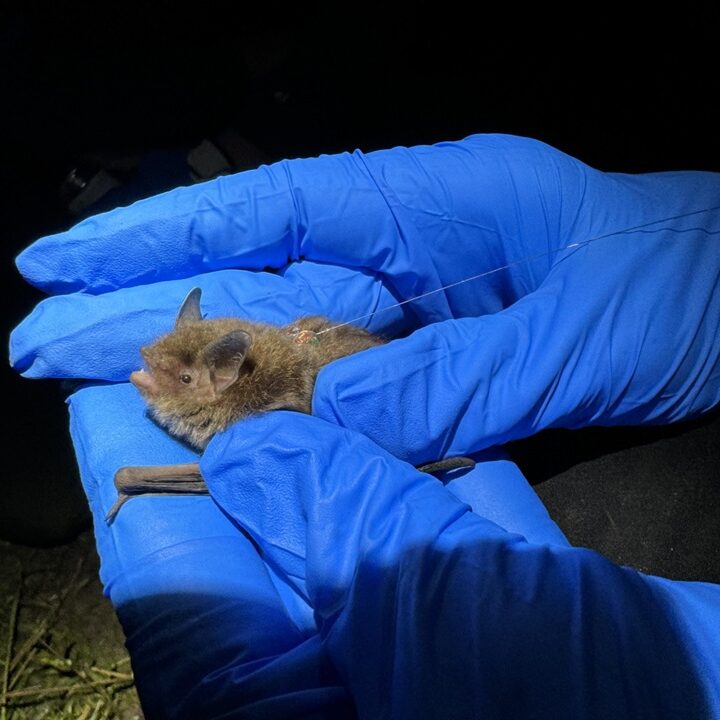
Mist netting is one of the primary methods our team uses to collect data. We use rectangular nets with very fine threading stretched across a flight corridor – usually a wooded stream, trail or roads. These nets need to be placed in a corridor in order to funnel bats into the nets since they have good eyesight and echolocation to navigate. Streams are particularly successful because bats are commonly using waterways to commute from roost sites to foraging areas, eating and drinking along the way which can distract them enough to get caught in the net.
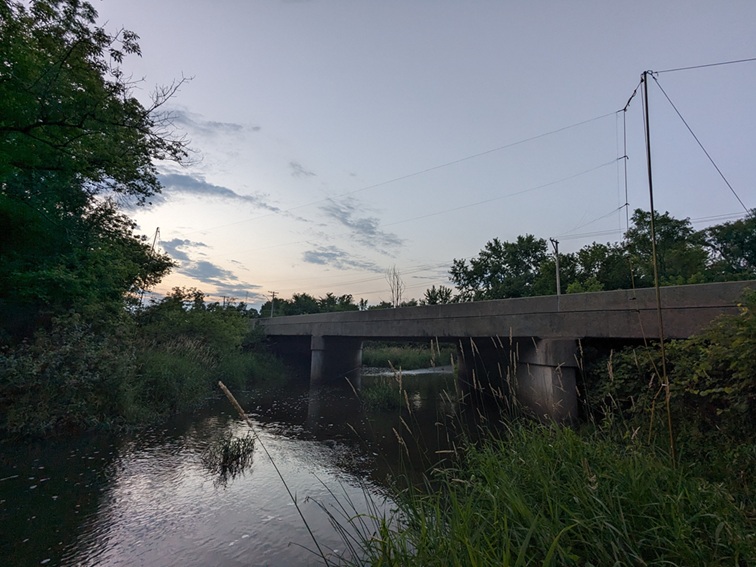
During mist netting our team sits far enough from the nets so that talking and headlamps won’t discourage bats from entering the nets. We open the nets at sunset and keep them open for five hours, checking the nets every 10 minutes. When a bat is identified in the net, it is carefully removed by a biologist who has been vaccinated for rabies and wearing leather gloves. The bat is brought to a data collection table and we record the species, sex, physical condition, reproductive status and age.
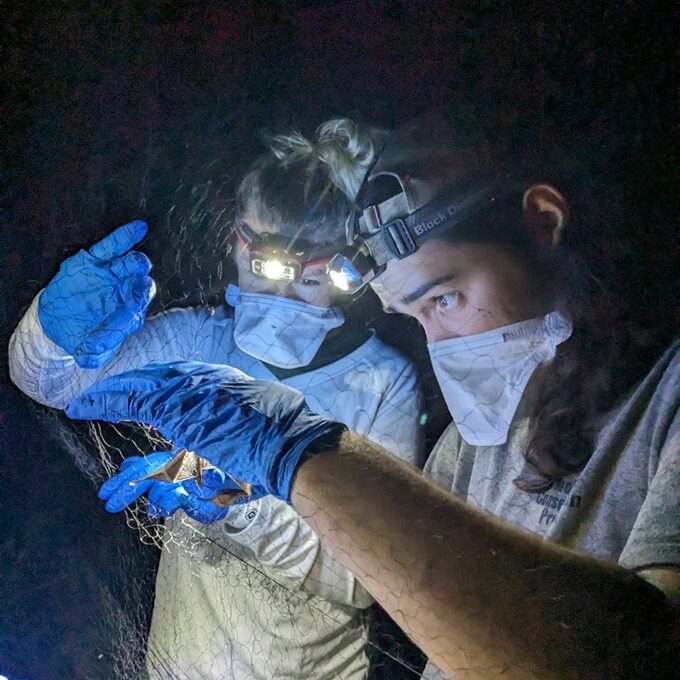
The data collected from mist netting is critical to understanding bat populations because when we have a bat in hand we can definitively know the species, see the condition of the bats and verify population growth through pregnant or juvenile bats. The downside of mist netting is that it is only effective in wooded corridors. That makes it difficult to understand how bats are using the landscape outside of forested habitat. Even in well-managed forests, mist netting can be difficult if there is an open understory with large trees.
Once we have a bat in hand, we can also make the decision to radiotrack the bat. This is when we attach a very small radiotransmitter to the bat to track it to it’s day roost. We typically do this with species of interest, especially those that are threatened or endangered. The day after mist netting, we can use an antenna to locate the bat. Identifying roost trees is critically important to conservation of imperiled species.