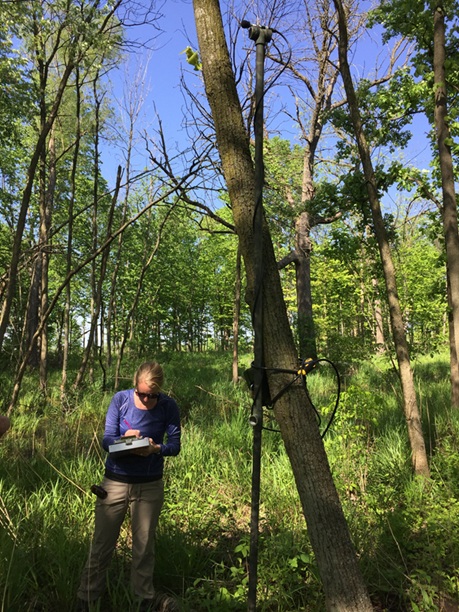
One of the ways we collect data on bats in Illinois is by using ultrasonic acoustic recorders. Specialized microphones allow us to record bats while they are passing by. Most acoustic surveys use a triggered setting which means when
an ultrasonic sound is detected, the device starts recording for a set amount of time or until the sound is gone. This means that we end up with lots of small sound files.
Surprising to a lot of people is that we generally are not listening to the files, but actually looking at the spectrogram, which is a visual of the sound frequencies. We use various processing software to run through the files and identify bat species by file. We end up with a spreadsheet of species and the number of files identified for each species.

This method provides our program with a lot of data compared to mist netting. We can identify some bat calls pretty easily, but others that are similar among related species are more difficult. For similar species we usually group them together, which still gives us valuable information. It is also difficult to estimate population sizes because we don’t know if three call files are three bats or one bat flying around. We use the term activity for the amount of files and assume sites with high bat activity are higher quality habitat because bats are spending a lot of time at these sites.
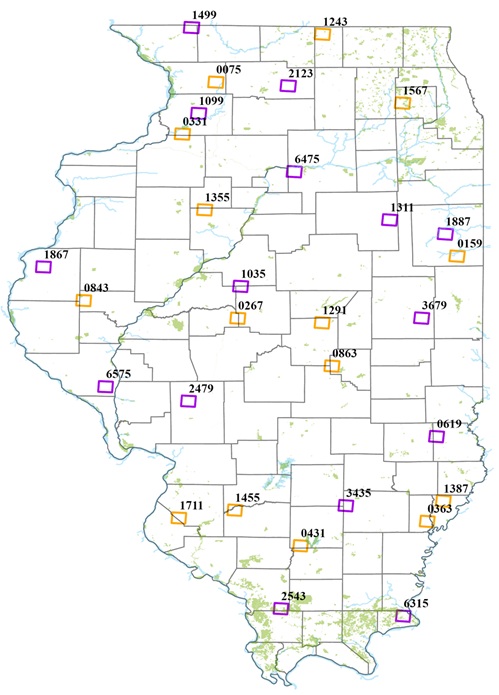
One of the ways we select sites is by following the North American Bat Monitoring Program. This uses a generalized random tessellation stratified (GRTS) sampling method, which means we survey locations all over the state. Since Illinois is 97% private property, we end up putting recorders up in a lot of backyards and farm fields!